Radiology Courses After 12th: No-NEET Paths, Fees, Salary & Scope in 2026
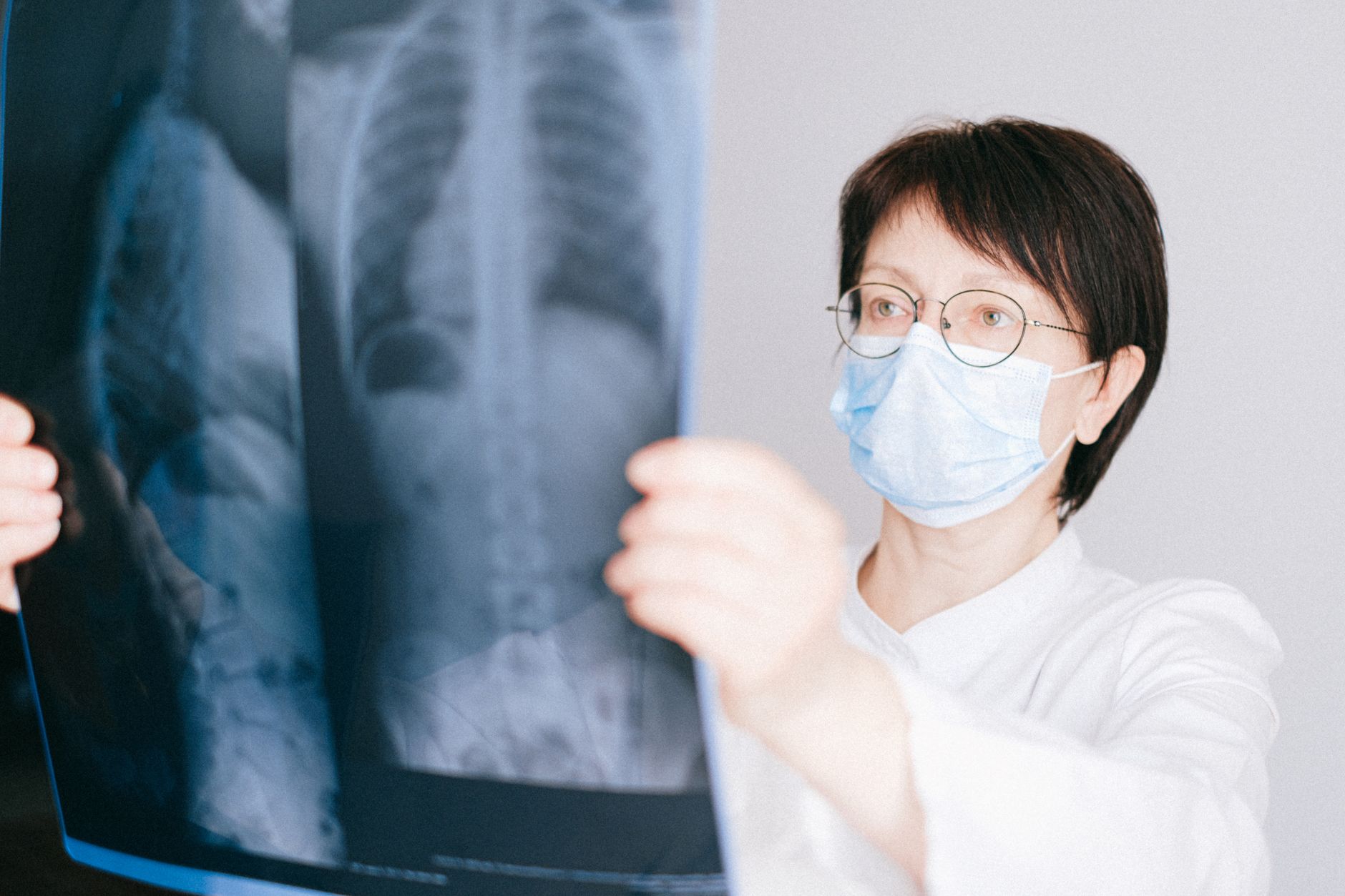
Considering radiology courses after 12th? Quick answer: Radiology courses after 12th let you enter medical imaging without NEET. The main options are BSc Radiology, BMRIT and BRIT, running 3 to 4 years including internship, with fees of Rs 40,000 to Rs 1.5 lakh a year and starting salaries of Rs 3 to 7 LPA in hospitals and diagnostic centres.
Radiology courses after 12th let you enter medical imaging without NEET. The main options are BSc Radiology, BMRIT and BRIT, running 3 to 4 years including internship, with fees of Rs 40,000 to Rs 1.5 lakh a year and starting salaries of Rs 3 to 7 LPA in hospitals and diagnostic centres.
If you finished Class 12 with Physics, Chemistry and Biology (or Maths), wanted a real clinical career, but the NEET result did not go your way, or you never wanted to spend years chasing an MBBS seat, radiology sits in a genuinely useful sweet spot. You work inside the hospital, you handle the machines doctors depend on, and you can be earning a salary within three to four years of leaving school. This guide walks through exactly what the radiology courses after 12th involve, what they cost, what they pay, and, just as importantly, who they do not suit.
What "radiology courses after 12th" actually means
The confusing part for most students is that three or four degree names all describe roughly the same career. Radiology courses after 12th almost always point to one of these bachelor's degrees:
- BSc Radiology / BSc Radiology and Imaging Technology (RIT) — the most common name, offered by medical colleges and universities.
- BMRIT — Bachelor of Medical Radiology and Imaging Technology — the name used by Manipal and several deemed universities. Same field, three-plus-one year structure.
- BRIT / BSc Radiography and Imaging Technology — "radiography" leans slightly more toward X-ray and image acquisition, but the day-to-day work overlaps heavily.
Do not agonise over the label. A BSc Radiology, a BMRIT and a BRIT graduate compete for the same technologist jobs. What matters far more is whether the college is recognised, has working machines to train on, and places its students. The umbrella term "medical imaging technology course" covers all three, and this is squarely an allied-health path, not an MBBS substitute — you become the imaging expert who runs the CT, MRI, X-ray and ultrasound, not the radiologist who reports the scan.
Do you need NEET? The honest answer
For the vast majority of colleges, no. This is the single biggest reason radiology courses after 12th have become so popular. Most universities and private colleges admit students on Class 12 merit (your PCB or PCM percentage) or through a common test like CUET-UG or a state paramedical CET — not NEET.
There are two honest caveats. First, a handful of top government institutions run their own paramedical entrance — for example, AIIMS conducts an AIIMS Paramedical entrance exam for its allied-health seats. Second, a very small number of programmes may reference NEET scores for shortlisting. So the accurate statement is: radiology does not require NEET at most colleges, but always check the specific college's admission page before you apply. If avoiding NEET entirely is your goal, you have plenty of strong options — see our wider list of medical courses without NEET to compare.
Eligibility: who can apply
The bar is deliberately reasonable, because this is a skills-based clinical field. Standard eligibility for radiology courses after 12th looks like this:
- Stream: Class 12 with PCB (PCB). Many colleges also accept Physics, Chemistry and Maths (PCM), which is why PCM students who missed medical seats often land here.
- Marks: a minimum aggregate of 50% at most colleges. Selective or government institutions may ask for 55-60%.
- Age: usually 17 years by 31 December of the admission year.
- Board: any recognised board (CBSE, ICSE, state boards).
If your marks are borderline, do not panic — private and deemed universities are far more flexible than government colleges, and merit-based direct admission is common. Students weighing this against other allied fields often also look at BSc MLT (lab technology) and physiotherapy (BPT), which share the same PCB eligibility.
Course duration and the internship year
Expect three to four years in total, and read the structure carefully because colleges word it differently:
- 3 years academic + 6 months internship = 3.5 years at many universities.
- 3 years academic + 1 year internship = 4 years at institutions like Manipal (KMC Mangalore), which is the official structure listed on their program page.
The internship is not a formality — it is where the degree earns its value. You spend it inside a working hospital radiology department, rotating through X-ray, CT, MRI, ultrasound and often the cath lab, under supervision. That hands-on year is what turns a certificate into employability, so a college with a busy attached hospital is worth more than a college with a shiny brochure. The academic syllabus itself has modernised: under the National Commission for Allied and Healthcare Professions (NCAHP), the competency-based curriculum for Medical Radiology and Imaging Technology now covers digital radiography, cross-sectional imaging, radiation safety under AERB norms, and PACS (the software that stores and shares scans).
Fees: government vs private, real numbers
This is where your choice of college matters most, because the spread is enormous. These are indicative 2026 bands — always confirm on the official college fee page.
| College type | Fees per year (indicative) | Total (3.5-4 yrs) |
|---|---|---|
| Government colleges (typical) | Rs 15,000 - 25,000 | Rs 50,000 - 1,00,000 |
| AIIMS (outlier) | Nominal (a few thousand total) | ~Rs 4,500 total |
| Private / deemed universities | Rs 40,000 - 1,50,000 | Rs 1.5 - 6 lakh |
| Premium private (e.g. Chitkara) | ~Rs 1,40,000 | ~Rs 5.7 lakh (4-yr) |
AIIMS is genuinely an outlier — its total programme fee runs to only a few thousand rupees, which is why a single AIIMS paramedical seat draws thousands of applicants. Treat it as the exception, not the benchmark. For a realistic budget, a solid private college will cost you somewhere between Rs 1.5 lakh and Rs 4 lakh for the whole degree. When you compare radiology courses after 12th on cost, always divide total fee by the earning potential — a Rs 3 lakh degree that lands a Rs 4 LPA job pays for itself inside the first year of work.
Entrance exams and admission routes
There is no single national gateway, which actually works in your favour — if one route closes, another is open. The common routes for radiology courses after 12th:
| Route | Used by | Notes |
|---|---|---|
| Class 12 merit (direct) | Most private / deemed universities | Admission on PCB/PCM percentage; fastest route |
| CUET-UG (NTA) | Central universities, many others | Single national test; growing acceptance |
| State paramedical CET | State government colleges | Varies by state; check your state's cell |
| AIIMS Paramedical entrance | AIIMS institutions | Institution-specific; highly competitive |
A practical tip: apply through more than one route in parallel. Sit CUET-UG, apply to a couple of private universities on merit as a backstop, and if AIIMS is realistic for you, prepare for its paramedical paper. This is standard practice across paramedical courses after 12th, where students routinely hold multiple offers before choosing.
Top colleges for radiology in India
"Top" should mean working machines and hospital placement, not a magazine ranking. These institutions are widely regarded for medical imaging technology courses in 2026:
| Category | Institutions |
|---|---|
| Government / premier | AIIMS (Delhi and others), CMC Vellore, PGIMER Chandigarh |
| Deemed universities | Manipal (KMC Mangalore, MTMC Jamshedpur), Amrita Institute of Medical Sciences |
| Strong private | SRM Institute of Science and Technology, SGT University, Chitkara University, Kalinga Institute of Medical Sciences |
Before you commit, ask three concrete questions of any college: How many working MRI and CT machines will I train on? Is the internship inside your own hospital or outsourced? What was last year's placement record and starting salary? A college that answers those clearly is worth more than a famous name that dodges them.
Salary: fresher to experienced
Radiology pays modestly at entry and rewards experience and specialisation strongly. These are indicative all-India ranges — metros and corporate hospital chains pay at the higher end.
| Stage | Annual salary (indicative) |
|---|---|
| Fresher (0-2 yrs) | Rs 2.5 - 4.5 LPA |
| Mid-level (3-5 yrs) | Rs 4 - 7 LPA |
| Experienced / specialised (MRI, CT) | Rs 6 - 12 LPA |
| Senior technologist / supervisor | Rs 10 LPA and above |
The jump from fresher to specialist is the real story of radiology courses after 12th. A general X-ray technician plateaus quickly, but an MRI or CT technologist — especially one trusted to run advanced protocols — commands a clear premium because those skills are scarce. Gulf and overseas hospital roles pay considerably more again, and Indian imaging chains that are expanding rapidly need trained technologists faster than colleges produce them.
Career roles: MRI and CT technologist and beyond
The degree opens a wider door than most students expect. After radiology courses after 12th, you can work as:
- Radiographer / X-ray technician — the entry role, running plain radiography in hospitals and clinics.
- CT scan technologist — operating computed tomography, a well-paid, in-demand specialisation.
- MRI technologist — running magnetic resonance imaging; among the highest-paid technologist roles.
- Ultrasound / sonography assistant — supporting diagnostic ultrasound.
- Cath lab technologist — assisting interventional and cardiac imaging procedures.
- PACS administrator — managing the imaging IT systems, a growing tech-adjacent niche.
Employers include multi-speciality hospitals, standalone diagnostic centres, imaging chains (which are opening across tier-2 and tier-3 cities), and medical-equipment companies who hire technologists for application and demo roles. The profession is now formally regulated: the NCAHP's Medical Radiology, Imaging and Therapeutic Technology Professional Council governs standards and registration, which over time strengthens both the credibility and the mobility of a qualified radiology technician.
Is it worth it? An honest ROI look
For the right student, radiology courses after 12th offer one of the best effort-to-outcome ratios in allied health. You skip NEET, you finish in three to four years, your total cost can stay under Rs 4 lakh at a good private college (far less at a government one), and you walk into a clinical job with a clear specialisation ladder above you. Demand is structural, not a fad — every new hospital and diagnostic centre needs imaging staff on day one.
But be honest with yourself about the trade-offs. Entry pay is modest; you will not start on a doctor's salary, and if Rs 3 LPA at 21 disappoints you, adjust expectations now. The work involves shifts, being on your feet, and daily proximity to radiation — safety training is serious for a reason. Career growth depends on you specialising; those who stay generalist plateau. And your future rests heavily on the college's hospital exposure, so a cheap college with no working MRI can quietly waste three years.
Who it suits: practical, hands-on students who like technology and healthcare, want to earn early, and are comfortable in a clinical, machine-heavy environment. Who it does not: students set on a doctor's role and status, those who dislike shift work, or anyone hoping for a very high starting salary without specialising. If patient care rather than machines is your pull, compare it honestly with BSc Nursing after 12th before deciding.
How to choose the right course and college
Cut through the marketing with a short checklist. When you shortlist radiology courses after 12th, confirm each of these in writing:
- Recognition: is the college affiliated to a recognised university and aligned with the NCAHP curriculum for Medical Radiology and Imaging Technology?
- Hospital: does it have an attached teaching hospital with active X-ray, CT and MRI departments for your internship?
- Machines: how many and how modern? Ask for the count, not adjectives.
- Placement: last year's placement percentage and the actual starting salaries offered.
- Total cost: the full multi-year fee including internship, not just year one.
Get satisfying answers to those five and the degree name — BSc Radiology, BMRIT or BRIT — becomes a detail rather than a decision. Radiology courses after 12th reward students who choose the training environment carefully and commit to a specialisation early; do both, and this is a fast, affordable and genuinely secure route into healthcare without ever sitting NEET.
Diploma or degree — which radiology route fits you?
If you want to start earning quickly, a 2-year Diploma in Radiography gets you into a hospital or diagnostic centre sooner and costs less. If you would rather build toward supervisory, MRI/CT and teaching roles, the 3-4 year BSc/BMRIT degree pays off over time — and many colleges let a diploma holder move into the degree through lateral entry. There is no single right answer: weigh your budget, how soon you need an income, and whether you see yourself specialising later. Fees and pathways vary by state and institute, so speak to working radiographers where you plan to study before you commit.
Before you apply, cross-check current eligibility and fees with official sources such as the NCAHP (ncahp.abdm.gov.in) and the NTA/CUET portal (nta.ac.in), not third-party listing sites.
Modern Curriculum & Future-Ready Colleges for Radiology courses after 12th
What radiology courses after 12th now teach: NCAHP has released a competency-based curriculum for Medical Radiology and Imaging Technology (among 17 curricula for ~28 professions, AY 2026-27); syllabus now spans digital radiography, CT, MRI, ultrasound, radiation safety (AERB norms) and PACS, with a supervised clinical internship year in a teaching hospital..
Colleges using advanced learning: AIIMS Delhi and other AIIMS (via AIIMS Paramedical entrance), CMC Vellore, PGIMER Chandigarh, Manipal (KMC Mangalore/MTMC Jamshedpur), Amrita, SRM, SGT University, Chitkara — chosen for NCAHP-aligned curriculum, working MRI/CT/cath-lab exposure and hospital placement links rather than brochure rankings.. When you compare radiology courses after 12th, prioritise colleges following this updated curriculum.
Frequently Asked Questions
Can I do B.Sc radiology after 12th?
Yes. B.Sc Radiology, Radiography or Medical Imaging Technology is open after Class 12 with Physics, Chemistry and Biology (some colleges also accept Maths), usually with a minimum aggregate. Admission is through Class 12 merit, CUET-UG or a university or state entrance test.
How can I become a radiologist after 12th?
A radiologist is a doctor: take Science with Biology in Class 11 and 12, clear NEET, complete an MBBS and then specialise with an MD or DNB in Radio-diagnosis. If you want to work in medical imaging without that route, a B.Sc in Radiology or Medical Imaging Technology trains you as a radiographer or imaging technologist.
Does radiology need NEET?
Only the doctor route does — becoming a radiologist needs MBBS through NEET, followed by an MD in radiology. B.Sc Radiology and Medical Imaging Technology programmes usually admit on Class 12 marks, CUET or a university test, though a few institutes use NEET scores, so check each college.
Is B.Sc radiology difficult?
It is demanding but manageable for students comfortable with Biology and Physics. You study anatomy, radiation physics, imaging techniques and patient care, with a lot of hands-on hospital training, and you must learn radiation-safety rules carefully. Regular practice in the imaging department matters more than rote learning.
Which radiology course has the highest salary?
Among technologist courses, a B.Sc in Medical Imaging or Radiology Technology followed by specialisation in CT, MRI or interventional imaging usually offers the best growth, especially in large hospitals and diagnostic chains. Radiologists, who are MD doctors, earn far more but follow the long MBBS route. Treat any figure as indicative.
How many years is a radiologist course?
It depends on the path. A diploma in radiography or X-ray technology takes about two years, a B.Sc in Radiology or Medical Imaging Technology takes three to four years including an internship, and becoming a radiologist (a doctor) takes about eight to nine years — MBBS followed by an MD or DNB in radiology.
Related Guides
Official Sources & Further Reading
- National Commission for Allied and Healthcare Professions (NCAHP), MoHFW
- Manipal KMC Mangalore — official BMRIT program page (4-year structure)
- AIIMS Examinations — paramedical entrance
Key takeaway: the best radiology courses after 12th match your interests, budget and goals — a quick aptitude check helps you decide with confidence.
Disclaimer:
Salary figures, course fees and other course details & career information provided in this article are for general reference only and may vary based on location, company, experience & market conditions. All kinds of information and data shared in this article have been sourced from publicly available websites and digital platforms. Readers are advised to independently verify all information from official and authentic sources before making any career decisions and educational decisions. GlobalCareerLabs.com does not guarantee the accuracy or authenticity of this data. And so, Global Career Labs shall not be held responsible for any decisions made on the basis of this information.